
Italian New Year’s Eve Dinner: Traditional Dishes and the Meaning Behind Them
Discover what Italians really eat on New Year’s Eve. From lentils and cotechino to stuffed pasta and traditional desserts, explore the symbolic meaning behind Italy’s most important holiday dishes.
LOCAL STORIES&CULTUREFOOD
Italian New Year’s Eve Dinner: Traditional Dishes Italians Really Eat on December 31st
In Italy, New Year’s Eve dinner is not just a meal.
It is a ritual.
While fireworks explode outside and champagne waits patiently in the fridge, Italian families gather around the table for a cenone di fine anno — a long, abundant dinner meant to close the year properly and invite good fortune into the next.
Unlike many modern celebrations, Italian New Year’s Eve food is deeply symbolic. Every dish carries a message: prosperity, protection, abundance, continuity. What you eat matters. How you eat it matters. And who you share it with matters even more.
This is not restaurant Italy.
This is home Italy.
In this guide, you’ll discover:
the traditional Italian dishes eaten on New Year’s Eve
their symbolic meaning, often rooted in centuries-old beliefs
how traditions change between Northern, Central, and Southern Italy
what Italians still cook today, behind closed doors
If you want to understand Italy, start from the table.
The Meaning of the “Cenone di Fine Anno”
The word cenone comes from cena (dinner) and the suffix -one, meaning “big”.
But “big” doesn’t just mean quantity.
A cenone is:
long (often starting at 8:30 pm and ending after midnight)
shared with family or close friends
rich in dishes that symbolize luck and renewal
Traditionally, Italians believed that what you do on December 31st sets the tone for the entire year. Eating abundantly meant abundance. Eating symbolic foods meant protection from hardship.
That’s why New Year’s Eve dinner still follows rules — even in modern households.
Why Italian New Year’s Food Is Full of Symbols
Italian food culture is deeply connected to:
rural life
agriculture
Catholic traditions
ancient Roman beliefs
Before supermarkets and modern medicine, food was both nourishment and hope.
Certain ingredients became associated with:
money
fertility
strength
continuity
Those beliefs survived wars, economic crises, and globalization — and still appear every December 31st.
The Undisputed King: Lentils (Lenticchie)
If there is one food Italians would never skip on New Year’s Eve, it’s lentils.
Why Lentils Mean Money
Lentils resemble tiny coins.
In ancient Rome, people carried a pouch of lentils as a wish for future wealth — hoping they would “turn into money” over time.
Eating lentils on December 31st is still believed to bring:
financial stability
prosperity
abundance in the coming year
The rule is simple: the more lentils you eat, the better the year will be.
How Lentils Are Served
Lentils are rarely eaten alone. They are traditionally paired with pork — another symbol of wealth.
Common pairings:
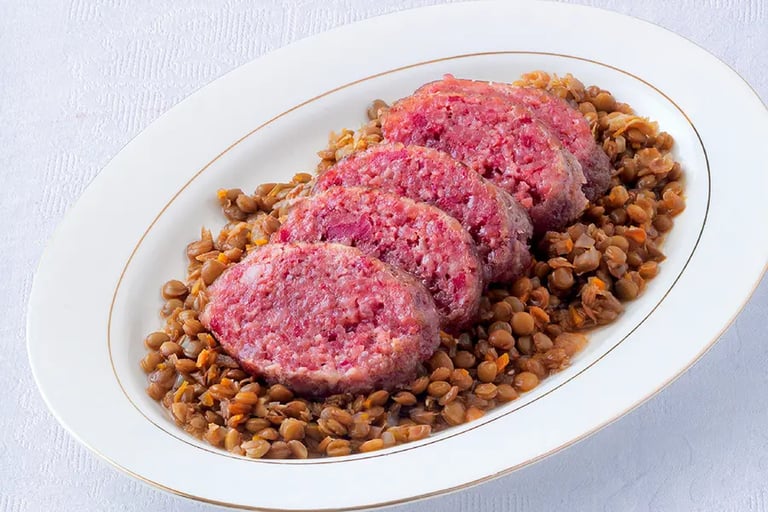
lentils with cotechino
lentils with zampone
lentils with sausages
In many homes, lentils are served right after midnight, as the first dish of the new year.
Cotechino and Zampone: Pork, Wealth, and Patience
Pork plays a central role in Italian New Year’s Eve traditions.
Why Pork Is Lucky
Unlike chickens (which scratch backward), pigs move forward.
Symbolically, pork represents:
progress
moving ahead
abundance
Historically, pork was eaten only on special occasions — making it a symbol of wealth and celebration.
Cotechino vs Zampone
Cotechino: a large pork sausage made with rind and spices
Zampone: similar mixture stuffed inside a pig’s trotter
Both are slow-cooked, often for several hours.
This slowness is symbolic too: good things take time.
Baccalà: The Fish That Connects North and South
In many Italian regions — especially in the South — fish replaces meat on New Year’s Eve.
The most iconic is baccalà (salt-cured cod).
Why Baccalà Is a New Year’s Dish
Historically, meat was expensive. Fish, especially preserved fish, was more accessible and associated with:
religious traditions
fasting
purity
Eating fish on New Year’s Eve is also believed to:
keep bad luck away
ensure health and protection
Regional Variations
Veneto: creamy baccalà mantecato
Campania: fried baccalà
Sicily: baccalà with tomatoes, olives, and capers
Despite regional differences, baccalà remains a common presence on Italian New Year’s tables.
The Role of Pasta: Comfort and Continuity
While pasta is an everyday food in Italy, it takes on a special role on New Year’s Eve.
Stuffed Pasta for Special Occasions
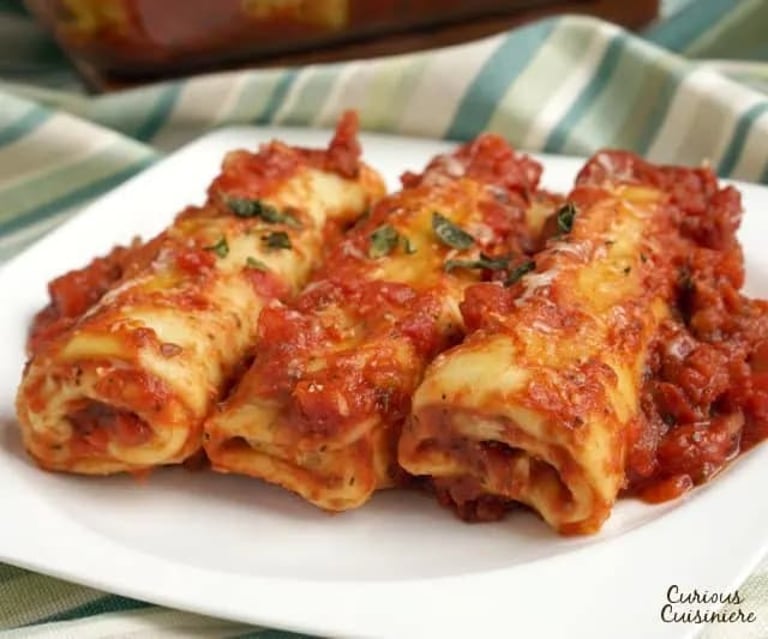
Many families prepare:
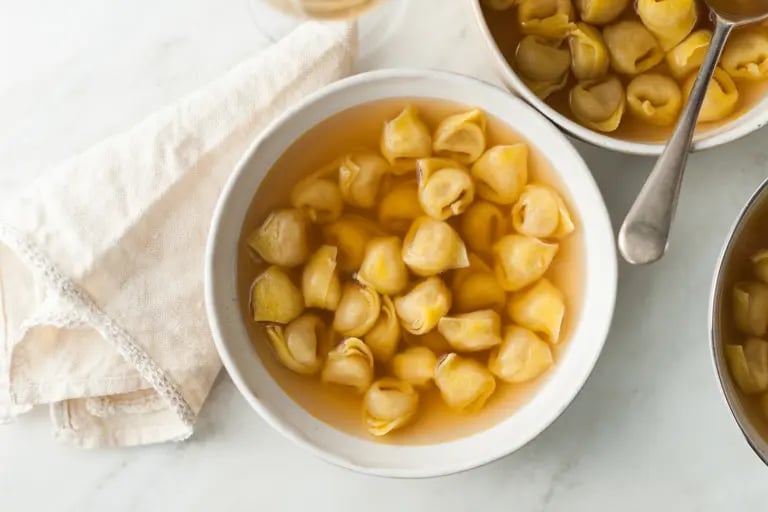
tortellini
cappelletti
ravioli
Stuffed pasta represents:
richness
care
tradition passed down through generations
The filling, hidden inside the pasta, symbolizes protection.
In Northern Italy, tortellini in broth are especially common — warm, comforting, and deeply traditional.
Fried Foods: Crunchy Luck
Fried food appears frequently on Italian New Year’s tables — especially in Central and Southern Italy.
Why?
Because frying transforms simple ingredients into something festive and indulgent.
Common fried dishes include:
fried vegetables
fried fish
small fritters
The crackling sound of frying oil was traditionally believed to scare away evil spirits.
Sweets and Desserts: Ending the Year on a Sweet Note
No Italian celebration ends without dessert.
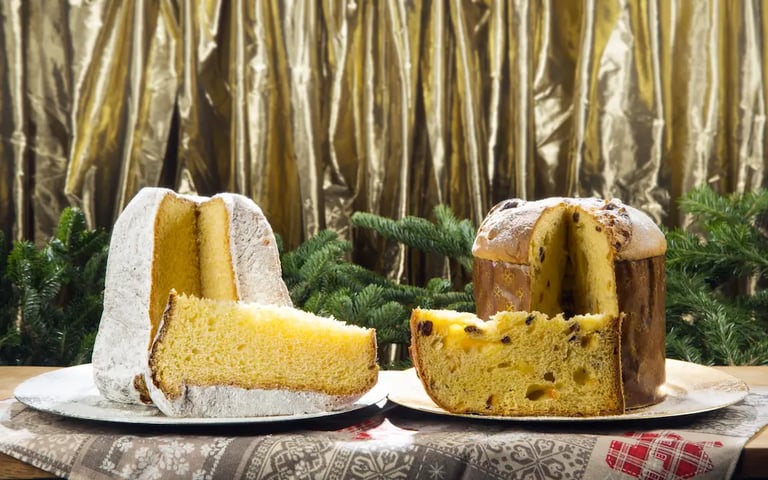
Panettone and Pandoro
These two Christmas desserts often return on New Year’s Eve:
Panettone (from Milan): airy, with candied fruit
Pandoro (from Verona): buttery and dusted with sugar
Both symbolize:
generosity
celebration
sharing
Regional Sweets
Struffoli (Campania): honey-coated fried dough balls
Cartellate (Puglia): fried pastry with vincotto
Torrone: nougat with almonds and honey
Sweetness at the end of the year is meant to ensure sweet days ahead.
After Midnight: What Happens at 12:00 AM
Midnight is the turning point.
Traditions vary, but common rituals include:
eating lentils
toasting with sparkling wine
hugging everyone at the table
Many Italians insist on finishing certain foods after midnight — symbolically bringing luck into the new year rather than leaving it behind.
Northern, Central, and Southern Italy: Different Tables, Same Beliefs
Northern Italy
stuffed pasta
cotechino or zampone
lentils
panettone
Central Italy
mixed meat and fish
fried dishes
rich desserts
Southern Italy
fish-based menus
baccalà
fried vegetables
honey-based sweets
Despite differences, the message is universal: abundance, family, hope.
What Italians Really Care About on New Year’s Eve
It’s not about perfection.
It’s not about trends.
It’s not about Michelin stars.
It’s about:
sitting together
honoring tradition
starting the year with intention
Italian New Year’s Eve food is a language — and once you learn to read it, Italy makes a lot more sense.
Eat Like an Italian, Wherever You Are
You don’t need to be in Italy to celebrate like an Italian.
All you need is:
lentils
something slow-cooked
people you care about
And time.
Because the most important ingredient of the cenone di fine anno is time spent together.
Final Thought
If you truly want to understand Italy, don’t start with monuments.
Start with a table, on December 31st, when the old year fades and hope is served by the spoonful.
REGIONS OF ITALY
FOLLOW US
© 2025 Roadside Italy. All rights reserved.
FESTIVALS IN ITALY
ITALIAN FOOD CULTURE
ITALIAN STORIES & TRADITIONS