
La Squilla of Lanciano: Italy’s Most Authentic Christmas Eve Tradition
Discover La Squilla of Lanciano, an ancient Abruzzese Christmas Eve ritual where bells, candles, and family traditions fill the streets with warmth and faith — the same spirit that inspired Mario Monicelli’s Parenti Serpenti.
LOCAL STORIES&CULTUREABRUZZO
When the Bell Rings in Abruzzo
As twilight settles over the rolling hills of Abruzzo on December 23, a sound echoes through the old town of Lanciano — a bell, slow and solemn, cutting through the crisp winter air. This is La Squilla, a centuries-old Italian Christmas tradition that marks the heart of the Abruzzese festive season. For locals, it is not simply a ritual; it’s an emotional homecoming, a moment when faith, family, and nostalgia intertwine beneath the glow of a thousand candles.
The name “Squilla” means “the little bell”, but its resonance reaches far beyond its size. At 5 p.m. sharp, the bell tolls from the Church of the Immacolata (La Concezione), summoning people to gather in silence. Streets empty as families stop what they’re doing, turn toward the sound, and reflect. For a few minutes, the entire town breathes as one.
The origins of La Squilla of Lanciano date back to 1612, when Bishop Tasso introduced the ceremony to commemorate his return from Rome. What began as a moment of devotion grew into a beloved Abruzzo festival that defines the local identity of Lanciano — a community that clings proudly to its customs even in an age of smartphones and screens.
“When the bell rings,” an old Lancianese saying goes, “every heart turns home.”
A Town Bathed in Light and Silence
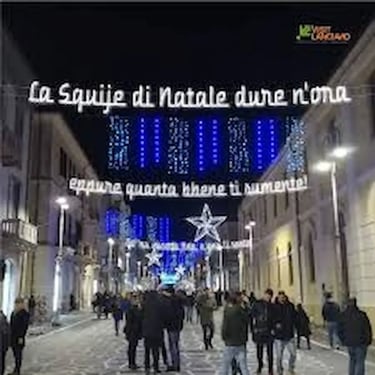
By mid-afternoon, the cobbled streets of Lanciano are alive with anticipation. Small groups of families, wrapped in thick scarves, wander toward the Corso Trento e Trieste. Shopkeepers close their shutters early; candles flicker in windows. The aroma of roasted chestnuts drifts through the air.
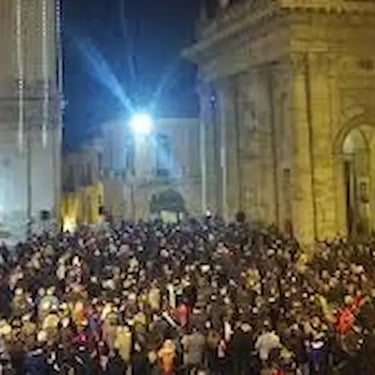
At the heart of the city, the Torre Civica, a medieval bell tower, becomes a luminous beacon. As the first notes of the Squilla sound, the crowd falls silent. People cross themselves. Mothers hold their children close. Elderly couples, who have heard the bell their entire lives, quietly weep.
This is the kind of Italian culture that lives not in museums but in the streets — tactile, emotional, and profoundly human. It’s an act of collective remembrance, repeated every December 23rd, generation after generation.
The bell tolls for ten minutes. When it stops, everyone turns toward each other and whispers, “Buona Squilla” — “Good Squilla.” Then the city begins to move again, slow and deliberate, like a heart starting to beat after a pause. Families walk home together to share a simple meal of baccalà, broccoli, and wine — food humble enough to honor the sacred stillness that came before.
A Tradition Rooted in Family and Faith
In a country where the Italian Christmas tradition often revolves around lavish dinners or festive markets, Lanciano’s Squilla stands out for its simplicity. It’s not about spectacle — it’s about connection.
At home, families gather around tables set with candles and icons of the Virgin Mary. The eldest family member leads a short prayer, thanking God for another year together. Then, in a tender gesture passed down through generations, the youngest child kneels before the grandparents to kiss their hands. This small act embodies the soul of Abruzzo: humility, respect, and love across generations.
No gifts are exchanged, no grand speeches made. Only that quiet gesture, heavy with meaning — a moment of recognition that family is the first and last miracle of Christmas.
For many Lancianesi who live abroad, La Squilla of Lanciano is the one time of year they return home. Even if work or distance keeps them away physically, at 5 p.m. local time they pause, wherever they are in the world, to listen to a recording of the bell or to pray in silence.
This unity — between those at home and those far away — makes the Squilla not just an Abruzzo festival, but a global symbol of belonging.
The Bell Beyond Borders
The emotion of La Squilla has even reached Italians who have never set foot in Lanciano. Over the years, journalists and filmmakers have tried to capture its meaning — none more memorably than Mario Monicelli in his 1992 film Parenti Serpenti.
A Cinematic Glimpse: Parenti Serpenti
In Parenti Serpenti (“Dearest Relatives, Poisonous Relations”), Monicelli paints a darkly humorous portrait of an Italian family gathering in Lanciano for Christmas. The movie opens amid the same lights, bells, and warmth of La Squilla of Lanciano, showing the town’s old streets alive with nostalgia and devotion.
But as the film unfolds, Monicelli contrasts that sacred tradition with the sometimes bitter realities of modern family life — where togetherness can feel like an obligation, and where the warmth of Christmas hides undercurrents of tension.
Through this juxtaposition, Monicelli captures something essential: the fragile beauty of tradition in a changing world. The film, both tender and cynical, mirrors the very spirit of the Squilla — a bell that unites people, even as life pulls them apart.
You can read more about Parenti Serpenti and its cultural context on the Italian cinema archives:
https://www.cinematografo.it/
The Soundtrack of an Italian Christmas Eve
When the bell stops ringing, the streets of Lanciano transform. The sound is replaced by laughter, greetings, and the clinking of glasses. Families spill into each other’s homes; the city glows with the soft orange light of candles in every window. Children play, couples embrace, and elders watch quietly, their faces reflecting both joy and memory.
There are no fireworks, no loud celebrations — just a collective sigh of gratitude. For a few fleeting hours, modern life seems to slow down. The Squilla reminds everyone of what Christmas once was — and still can be — when stripped of noise and excess.
Those who visit during this time often say it feels like stepping into a living nativity scene, where the faith of a town is made visible through silence.
For visitors planning to attend, more information on schedules and history is available through the official tourism portal of Lanciano:
https://www.visitlanciano.it/
Not Everyone Knows
There’s a beautiful, lesser-known custom tied to La Squilla of Lanciano. At precisely 5 p.m., not only do church bells ring, but every household bell or chime in town — from doorbells to bicycle bells — is rung three times. This gesture symbolizes unity: each home becomes part of a vast, invisible orchestra echoing through the valley.
Another little secret: some families place a red candle on the window sill, representing the warmth of Christ’s love guiding travelers home through the cold Abruzzo night. In older times, shepherds descending from the mountains would follow the flicker of these lights back to their families.
And while the tradition is deeply religious, it’s also inclusive. In recent years, non-religious residents have reinterpreted the moment as a celebration of peace and gratitude — a pause for reflection in an increasingly hurried world.
Learn more about Abruzzo’s hidden Christmas traditions here:
https://www.abruzzoturismo.it/
Why It Matters Today
As global culture becomes more homogenized, small-town rituals like La Squilla of Lanciano become essential anchors of identity. They remind Italians — and anyone who witnesses them — that authenticity lies in simplicity.
Unlike the glitzy markets of northern Europe or the commercial excesses of big cities, the Squilla keeps Christmas grounded in emotion and memory. It’s a kind of cultural resistance, a way for Abruzzo to say: “This is who we are, and this is how we remember.”
For younger generations, growing up with smartphones and social media, attending La Squilla can feel like touching something timeless. It’s not unusual to see teenagers filming the event for TikTok — and then putting their phones down, caught in the emotion of the moment.
Tradition survives not because it resists change, but because it continues to mean something real.
The Spirit of Lanciano
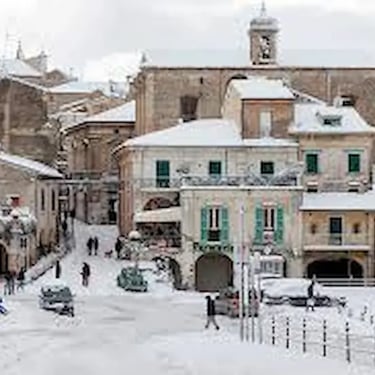
Lanciano itself deserves a mention — a beautiful hilltop city in southern Abruzzo, filled with stone archways, piazzas, and the scent of bakeries preparing panettoni and mostaccioli. Beyond La Squilla, the town is also famous for the Eucharistic Miracle of Lanciano, one of the most important relics in Catholic history
(learn more: https://www.vatican.va/).
Visiting during December feels like walking through a postcard — every balcony strung with lights, every face touched by kindness. Yet behind the beauty lies something even stronger: a sense of belonging that no storm of modernity can erase.
Frequently Asked Questions (FAQ)
Q1: When does La Squilla of Lanciano take place?
It happens every December 23rd at 5 p.m., one day before Christmas Eve.
Q2: How old is the tradition?
It dates back to 1612, introduced by Bishop Tasso as a gesture of peace and unity.
Q3: What should visitors expect?
Expect silence, bells, candles, and emotion — not a loud festival, but a spiritual gathering.
Q4: Is it related to the film Parenti Serpenti?
Yes, the movie’s opening scenes were filmed during La Squilla, portraying the atmosphere of family and faith in Lanciano.
Q5: How can I attend?
Arrive in Lanciano by early afternoon, as streets close before 5 p.m. More details are on the official tourism site: https://www.visitlanciano.it/.
REGIONS OF ITALY
FOLLOW US
© 2025 Roadside Italy. All rights reserved.
FESTIVALS IN ITALY
ITALIAN FOOD CULTURE
ITALIAN STORIES & TRADITIONS